The Maritime Domain – An Abiding Stage for Cooperation and Conflict

By

Vice Admiral (retd) Vijay Shankar

(To be published in Salute magazine)

.“What made war inevitable was the growth of Athenian power and the fear which it caused in Sparta”.

                                                (Thucydides, History of the Peloponnesian War)                                               

The first truth is: the outcome of modern wars have hinged on economic fallouts. The second is: conditions have been greatly influenced by rudimentary universal education. Leadership have split the vast majority of populations into two categories: those that believe in unrestricted economic activity and an opposing camp enticed by authoritarian rulers to view the former in venal light creating a centrally controlled camp.

So, we note, the extinction of the “Cold War” was a temporary hiatus that after three decades has morphed the communist bloc to an autocratic and nationalistic faction comprising China and Russia that seek revision of world order and its hitherto inequities, at least that is what the bloc will have the rest of the world believe. This refrain that Beijing and Moscow profess brings it in direct conflict with the believers of unrestricted economic activity. At the same time the vision of unrestricted global economic activity has proven so fragile and subject to the many nuances of geopolitics that resource deficient nations are left out.

Geopolitics a New Slant

 The term ‘geopolitics’ has often been employed in reference to a nation’s interest and stratagems adopted to secure them. This meaning is subjective; it does not account for the full significance of the term, and even bears a negative connotation. During the Second World War, Japan’s expansionist policies were justified using the ‘geopolitical’ argument. In the 21st century, geopolitics aims at explaining how geography can impact politics and how states try to mitigate these effects. Geography, in other words, contributes to defining the boundaries of what is possible to achieve in international relations along with economic and security advantages that may be leveraged. China In its South China Sea policy has shown just how ‘creatively’ this can be achieved.  

The Maritime Domain

 Thucydides, in the 4th century Bce, chronicled the events of the Peloponnesian War (431-404Bce). The War was fought between two leading Greek city states; Athens and Sparta and their allies. The conflict bears so many similarities to wars waged through the ages, that, to this day it offers lessons. The Athenian alliance included most of the littorals of the Aegean Sea, while Sparta was at the head of an alliance of continental powers. Athens had the stronger navy and Sparta, the stronger army. It was Athenian aggressive moves to establish empire and control the Mediterranean Sea that caused fear in Sparta and provoked war. The years of fighting were largely battles of attrition that depleted manpower and financial resources of both sides. Eventually, the Spartans destroyed the Athenian fleet, leading to capitulation of an exhausted Athens. Two significant lessons emerge:

  • Wars of attrition between balanced alliances do not yield spectacular victories, rather, exhaustion and a blurring of lines between victors and vanquished.
  • Wars of choice stimulated by overconfidence dangerously leave much to chance.

Towards the end of the 19th century it was thinkers like Mahan and Julian Corbett who set ablaze the maritime spirit of the new century. In The Influence of Sea Power upon History, Mahan analysed the use of British naval forces in conflicts to demonstrate that nations that had exercised control of important parts of the maritime domain, had dominated history. More specifically, it was the effect of sea power upon the course of history and the prosperity of nations that had allowed Britain to achieve global pre-eminence. Mahan’s significance was twofold: The first in the realm of grand strategy he asserted integration of maritime and naval activities with politics and economics. The second was command and decision making in war from a position of naval superiority. Since the sea was both a logistical highway and an avenue of approach, Mahan emphasized that command of the Sea gave enormous power and could only be attained by a dominant fleet with established bases and colonies. Sea power was about commercial use of the domain in peace and its control in war; about profits and power projection. Mahan’s theory remained persuasive till the first half of the twentieth century.

Corbett, on the other hand, believed naval influence on the maritime domain to be a part of national policy which had sway over the non-military elements of state power. He saw the fleet not merely an instrument of destruction but as an accompaniment to assuring the “act of passage on the sea.” It was from this critical tenet that concepts of Sea Denial, Sea Control and Power Projection evolved. Perhaps his abiding legacy to contemporary maritime thought was the idea that “freedom of the seas was an irreducible factor” for the sea was not territory for conquest; nor the oceans defensible. What it constituted was a substantial determinant in the growth of a nation and prosecution of war (Corbett Julian, Some Principles of Maritime Strategy, Longmans, 1911).

The Economic Motif: Strategic Competitiveness   

National wealth and economic prosperity are to some extent inherited but, in the main, created by the innovativeness of people. In this milieu the role played by the individual nation in international relations has become more rather than less critical. Therefore, strategic competitiveness has become one of the central preoccupations of government. Yet for all the writing on the topic, there is still no theory nor is there an accepted definition of the term in global affairs.

 The phrase “Strategic Competitiveness” first made its appearance in the 2018 National Defence Strategy of the USA . The document identified the revisionist states of China and Russia as strategic competitors. China for using “predatory economics” to intimidate lesser endowed nations while militarizing and persisting with its illegal claims in the South China Sea. It saw Russia as an autocratic nationalistic state that eschewed the economic, diplomatic, and security aspirations of its erstwhile bloc

It is amply clear that strategic competitiveness develops when the existing status-quo is challenged, or indeed when a state or an alliance contests the emerging challenge. The tools of the contest are the combined “comprehensive national power” of the two parties embracing political, economic, diplomatic, military and technological prowess.

 Multi-Polarity and the Prospects of Stability

The multipolar distribution of power which marks contemporary geopolitics has spawned security imbalances on account of economic inequities, interdependences, geography, demographics, the military and nature of government. It has incited jostling for control and power-ascendancy. The twentieth century mass violence of the two World Wars was caused by these very imbalances. It gave way, in 1945, to relative ‘stability’ distinguished by bi-polar tensions and the Cold War.

Demise of the Cold War in 1991 ushered in two decades of an unrestrained militaristic unipolar world order before a return to a complex agglomeration of powers of the day. The challenge to global order today is exemplified in the Putin Doctrine. Driven by a vision of renewal; Moscow considers the use of force as appropriate when its security is threatened. Its primary purpose is the rejection of a western conceived global order and global acceptance of Russian exceptionalism.

Looming Contestant: China

An historical analogy may be in order to fully understand the looming conflict between Chinese authoritarianism and the uneasy democracies of the world, particularly so in India. In the run up to the First World War, Germany pursued a combination of militarism, overbearing diplomacy, nationalism and brinkmanship to achieve policy goals, despite the risk of war. Demanding a review of international order that would confer on it a dominant political position, in keeping with its self-perceived economic and military prevalence, Germany saw little issue in conflict being a natural corollary to its creating crises and then manoeuvring through them. In the event, it was the response to ambitious revisionism and disregard of norms that led to war. An observer of contemporary geopolitics will not fail to note the similarity in circumstance, of China’s economic growth and vulnerabilities in the maritime domain, “military muscularity” pivotal to its geopolitical vision, ambitions, nationalism and its realpolitik instincts. However, the Belt and Road Initiative, which was the economic centre-piece intended to deliver billions of dollars in infrastructure financing to some countries in Asia, Africa and Europe, has now turned into a massive debt trap. The critical assumption of China’s leadership is that their new era of rejuvenation will progress per script unopposed. This assumption is flawed for as Michael Howard pointed (Lessons of History pg39) “force is the midwife of historical processes.” A clash is brewing, unintended as it may be. 

 Contestant Groupings

On cue, in response to China’s aggressive manoeuvres; the formation of a trilateral alliance between Australia, UK and the US (AUKUS) and the continuing Strategic Security Dialogue between Japan, Australia, India and the US (Quad) have made it amply clear that “countering China’s assertiveness in the Indo-Pacific” is number one priority, and the two will do whatever it takes to succeed.  Ironically, Beijing’s recent White Paper titled “National Defence in a New Era” outlined its territorial ambitions in the South and East China Seas, Yellow Sea, Taiwan and Ladakh and warned regional powers of its willingness to use force and use it first if its ambitions are threatened.

The more palpable part of the ‘AUKUS’ is the transfer of 8 Nuclear-powered submarines (SSN). The SSNs will not be available to Australia for the next decade and a half, however they provides the basis for denial operations in these waters and gives access to a host of futuristic capabilities. AUKUS’s mission is complemented by the Quad presenting a new security architecture that combines both military and economic prowess amongst nations that share a vision of a free and rule-based Indo-Pacific. The resolve to strategic confrontation against revisionism is thus emphasised. Such a visible demonstration of collective power is, perhaps, the only way to dampen Beijing’s aggressive expansionism.

That these initiatives have made China “edgy” is clear from their declarations that “China will certainly punish Australia with no mercy”. Fearing forced unification, Taiwan is tightening its ties to the U.S.; Japan, is engaged in its largest military build-up since the Cold War; India is readying strike forces along China’s borders, developing strategies to occlude vital sea lanes in the Indian Ocean and has engaged partnerships that threaten China’s vulnerabilities; Australia is opening up its northern coast to U.S. forces. France, Germany, and the UK are sending warships into the Indo-Pacific to assert their rights. Clearly,  Nations have become less enthused by China’s market and more worried about its disturbing intent.  

 Conclusion

We had earlier touched on a pre-First World War analogy. However, one may surmise that given the nuclear overhang, the rise of China with its burden of a ‘century-of-humiliation’ will demand a firm strategy tempered by pragmatism rather than principles of the past. But the other reality is the fear of war, to authoritarian regimes that co-exists with belligerence and exalted nationalistic feelings that, while advancing concern of survival of dispensation, also boost profitable involvement in the incessant preparedness for war. Herein lies the striking resemblance with pre-First World War Germany. And herein also lies the chink that provides the opportunity to collar China through unified action where it is most vulnerable – in the maritime domain. This would not only threaten its dream of rejuvenation but also of regime survival.
The Ill Fated Moskva

By

Vice Admiral (Retd) Vijay Shankar

(Published in the IPCS Web Journal available at the following site http://www.ipcs.org/comm_select.php?articleNo=5822 )

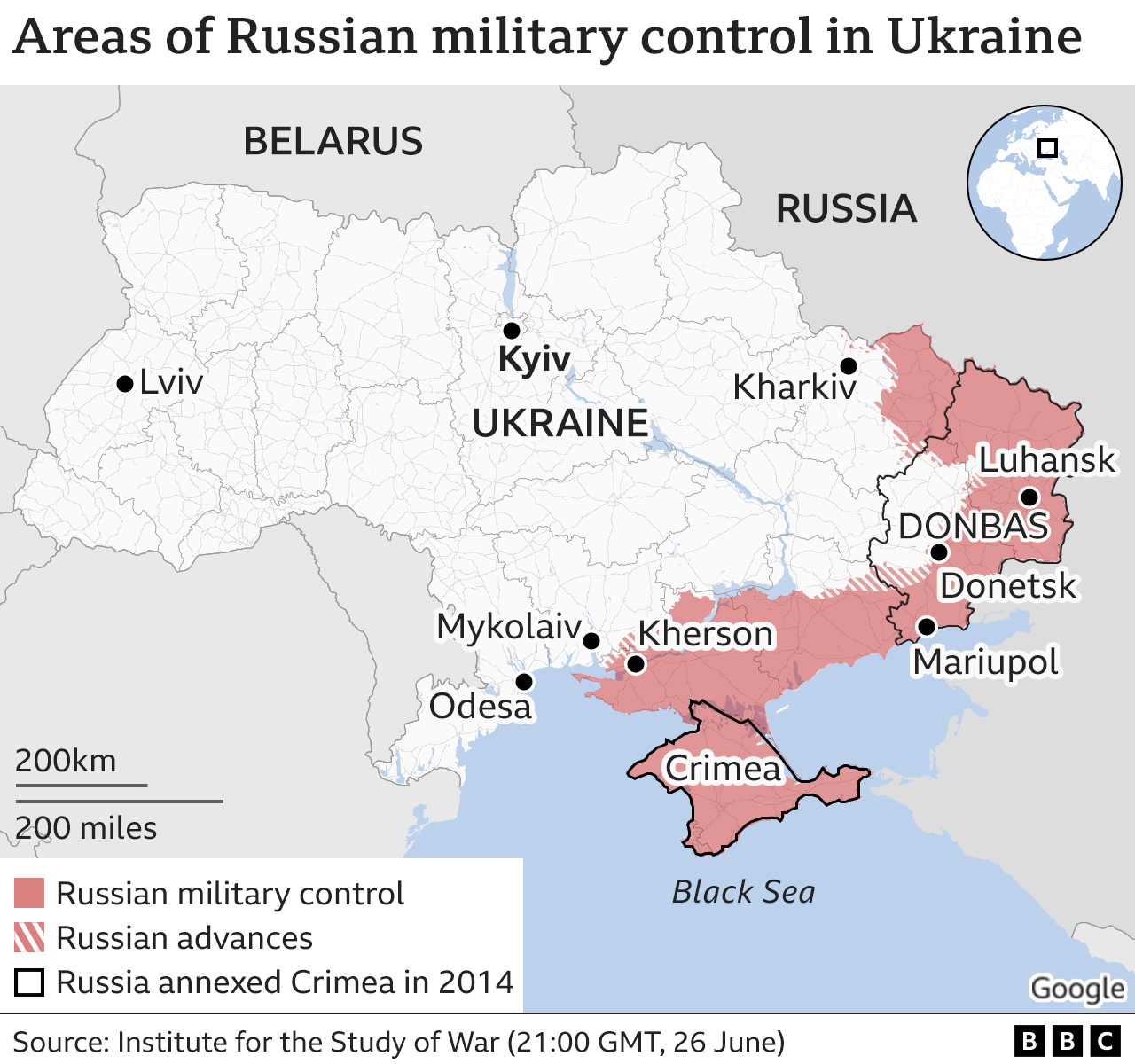
At the beginning of Russian combat operations in Ukraine in late February 2022, Kremlin had delivered an ultimatum while massing forces on Ukraine’s borders: either Moscow would be given iron-clad assurances that Ukraine would never join NATO, or it would take military action. In fact, the 2022 war in Ukraine is the culmination of a decade of clashes pitting Ukrainian aspirations against Russian security anxieties. These tensions first broke out into an armed conflict in 2014 in the wake of mass Ukrainian insurgency aided by western artifices that toppled the then “democratically” elected regime of President Viktor Yanukovych. Russia annexed Crimea and appropriated the naval base at Sevastopol. It also set into motion an insurgency in the east to bring under its fold the ethnically kindred regions of Luhansk and the Donbas.

The situation in the Black Sea during the period preceding the “special military operations” was marked by three significant factors. First, the modernising of the Russian Black Sea Fleet which followed annexation of Crimea and the appropriation of the former main naval base at Sevastopol, it rejuvenated the fleet which had seen neglect, deprivation and distress for three decades post collapse of the USSR. By 2019 the resurgence of the Fleet was apparent when the force capability was designated to meet tasks of “maritime dominance and Sea Control”. Second, Turkey had prohibited transit of belligerent warships through the Straits. And third the challenge of NATO’s eastward expansion.

The Incident

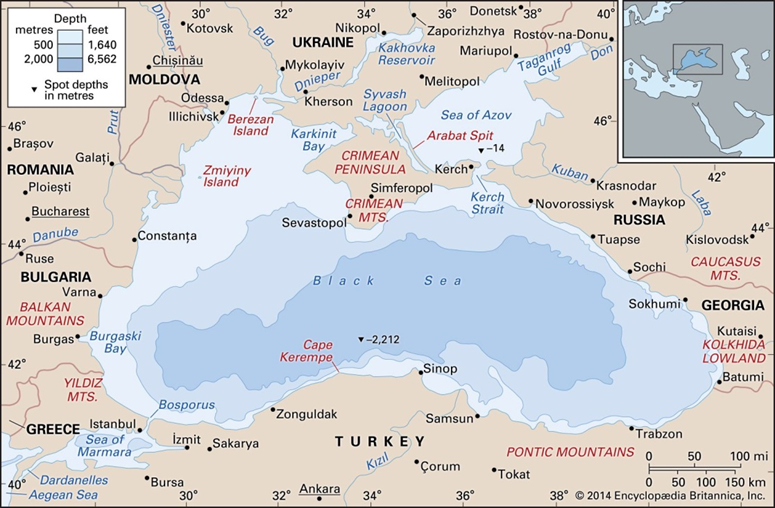
A heavy cruiser of the Russian Black Sea fleet, the ‘Slava’ class missile cruiser,  Moskva, sank at 1852h local time on 14 April 2022 in position 45°10′43.39″N 30°55′30.54″E, about 80 nautical miles south of Odessa and around 50 nm from the Ukrainian coast, after being “seriously damaged.” That is as far as one can establish from reportage thus far of the matter. What caused the sinking, circumstances of the episode, or even the events leading to the catastrophe remain mired in fact-distorting partisan narratives.

Conflicting Accounts

The Russian defence ministry said ammunition on board exploded in an unexplained fire and the Moskva capsized under tow back to its base port at Sevastopol. Ukraine claims it struck the vessel with a salvo of two “Neptun” surface-to-surface missiles while the USA/NATO sources have put out a version to credit the episode to targetting  intelligence  passed on to Ukraine coast defence forces, this has been roundly denied by the Pentagon.

If indeed the Russian variant of events is to be believed then it speaks of either poor maintenance of on board damage prevention systems or of dismal crew competence. This deduction is founded on the norm that a warship puts to sea on a combat mission only if both man and machine are hazard-free; notwithstanding the ship’s “maturity” (Moskva was over 40 years old). Besides, what was the Moskva doing within missile range? If the Ukrainian recital is to be accepted, then why were follow-on salvos not launched, after all the fire control solution was at hand, target had been ‘crippled’ and escorts were in the vicinity? As far as US/NATO targeting data is concerned, this would have had to have been persistent using interoperable data link; at which time the question begs to be asked, why were more Russian warships not targeted?

Operational Situation

The operational situation in the northern Black Sea during the weeks preceding the sinking of the Moskva was as mentioned earlier marked by three factors. First, the modernising of the Russian Black Sea Fleet which followed annexation of Crimea and the appropriation of the former main naval base at Sevastopol, it rejuvenated the fleet which had seen neglect, deprivation and distress for three decades post collapse of the USSR. By 2019 the resurgence of the Fleet was apparent when the force capability was designated to meet tasks of “maritime dominance in the Black Sea, Sea Control and “counter-naval” operations.

Ukraine, on the other hand, anticipating the looming conflict, had resorted to defensive mining of the approaches to their main ports of Odessa, Ochakov, Chernomorsk, and Yuzhny with around 420 vintage moored mines. It is reported that stormy sea conditions had set some of these adrift and freewheeled them to the south and western parts of the Black Sea.  By end-March, however, Ukrainian surface forces, coastal defence and naval aviation had been decimated, major ports blockaded and  Russia had established partial Sea Control in the Northern Black Sea.

Second, Turkey had imposed article 19 of the Montreux Convention that prohibits belligerent warships from transit through the straits. From an unsentimental angle, this placed the Straits under Turkish and therefore de-facto NATO control; unless Russia chose to militarily challenge the Convention. In the current situation, the Turkish government finds itself in a ticklish strategic situation, as both Ukraine and Russia are important partners in economic, energy and military agreements. Being a member of NATO, upsetting Russia over the Straits may well suck it into direct conflict if it does not succeed in a balancing act that threatens a teetering order.

Third, the challenge of an enlarging NATO and the consequent shrinkage in influence of the Russian State has been a source of considerable chagrin to the Kremlin. One of Russia’s seething demands has been for NATO to stop expanding eastward as it brought the “line-of-discord” to Russia’s door-step. The current standoff between Russia and NATO has been vitiated by the narrative of Western betrayal of not (debatably) upholding the promises made in 1990. And yet, Ukraine coming in the wake of Chechnya, Armenia and Georgia, there is that unmistakable reminder that Moscow retains a dominion perception of power.

Narrative

              The facts of the incident have not quite emerged; in the circumstance, to stitch together an account based on available media reports is at times contrary and at others, partisan. But as mentioned earlier the fact is, the Moskva capsized under tow and sank. An attempt is now made to fathom the incident based on derivations from available (indisputable) premises.

On 14 April 2022, the Moskva sank 80nm South of Odessa and 50nm East of the Ukrainian coast (see chart 1) and lay on the Odessa Shelf. Soundings in the area are between 50 to 100 metres. Being the flag ship of the Fleet, it may be assumed from the operational situation, that she was the designated Commander of the Russian blockading force deployed north of the line joining Sevastopol and the captured Zmiiniy (Snake) Island . That, the Moskva was operating within 50nm off the Ukrainian coast, would suggest that the Russian Command had either ruled out the threat to the blockading force from Ukrainian cruise missiles or had complete confidence in their ability to suppress enemy surveillance and control systems. It would appear the Russian forces did not, for some reason, even consider the possibility of targeting data coming from any other source. It is equally curious that contradictory media reports continue to emerge of US involvement in targeting despite Pentagon’s denial.

Analysis

Cruise missiles such as the “Neptune” are offshoots of the Russian Kh 35 or what is still in service in the Indian Navy, the “Uran” system. The missile cruises at sub-sonic speeds, but after lock-on target is achieved it may manoeuvre or boost speed. Their tolerance for un-factored target movement at any cognizable speed is limited; therefore the requirement for continuous target data to generate vectors “Along and Across the-line-of-fire”.

Commercial satellites systems may be used for the initial search of shipping, however for tracking and targeting high end military grade precision systems would have to be paired. This is critical to solve the fire control problem and establish any semblance of precision launch. Therefore, the suggestion of an alternate military targeting source.  Although it is known that Ukraine operates the Turkish Bayraktar TB2 UAV, it is dependent on tactical data link for networking, which theoretically allows for linkage with in-area USN/NATO maritime patrol aircraft and thereafter for targeting by shore based anti-ship missile units.

Whether NATO would have exploited the situation in such direct manner and risked a hot face off with Russia is the moot question. Besides, the Kremlin not having shown any reaction to the possibility of direct US/NATO involvement questions the validity of the proposition. Could the Moskva have challenged such a cooperative encounter, it certainly had the wherewithal and yet it did not. The question arises why not? There is of course the possibility of existence of tacit understanding between Russia and the USA of the limits of engagement.

A Clouded Conclusion

Maritime savvy dictates that in potentially hostile waters the most valuable warship be protected. If the Moskva was the Blockade Commander or indeed deployed to provide command and control, air-defence and anti-surface protection to the force, then it would have had a defensive surveillance and strike screen. Under these conditions it is not at all clear as to how the ship  was attacked and why there was no response? Unless the engagement was orchestrated by US/NATO forces, or the hapless ship ran into a mine or verily succumbed to a catastrophic accident.

Pope Francis’ macro-perspective of the conflict bears an irresistible logic that may provide insight into the fate of the Moskva, he said “We do not see the whole drama unfolding behind this war, which was perhaps, somehow either provoked or not prevented”.

Chart 1 The Northern Black Sea Theatre

Deciphering China’s Grand Strategy

By

Vice Admiral (retd) Vijay Shankar

Published in the IPCS web journal in the authors column “The Strategist” may be accessed at  http://ipcs.org/comm_select.php?articleNo=5806

Xi’s Declarations

China’s strategic priorities constitute “comprehensive national security,” with regime-security being key and economic-security being the foundation and means to its Grand Strategy. The People’s Daily Online, reviewed Xi’s important declarations made while addressing the Central National Security Committee (CNSC) and the Congress of the Chinese Communist Party (CCCP). Xi’s declarations included the following:

  • Uphold  Party’s Absolute Leadership over national security (17 Apr 2018, CNSC).
  • Improve strategic ability(17 April 2018, CNSC}.
  • Adhere to the organic unity of people’s security, political security, and national interest (18 Oct 2017, CCCP).
  • Play the first move well, play the active battle well, and be prepared to deal with any form of conflict, risk or challenge(18 Jan 2016, CCCP).
  • Take people’s security as the purpose and political security as the foundation, and embark on a national security path (15 Apr 2014, CNSC).

While some of the flavour may have been lost in translation the essence emerges only if we consider political survival of the CCP as key to national and economic security. Implying that the bulk of the population are mere vassals of the state. After-all, less than 6.7% of the population of China are members of the CCP.

What Do These Declarations Mean?

 “Absolute leadership” is a reminder to the world of the CCP’s internal stakes. If any saw in Beijing the possibility of egalitarianism, it must come as a rude awakening. It also brings into focus the reason why “galloping-growth” is an imperative for regime survival.

 “Strategic ability” of a nation is predicated on its people and their talent to generate wealth. People, for large nations, are also the most powerful consumers. When productive-age population shrinks, so do revenues. That has already happened to China since their “one child policy” of 1979. Adding to that Beijing’s policy of predatory economic statecraft and territorial ambitions, have hardly gone down well with the world community. No longer are nations enthused by China’s markets as they worry more about its disturbing intent.

 Examining the linkage between “unity of people’s security” with political security, and national interest; there is a contradiction that no action by the CCP can reconcile. The bond between people and politics is at best a tenuous one, for 6.7% of the population to claim first right of existence is only conceivable in a tyranny. George Orwell put it succinctly, “All tyrannies rule through fraud and force, but once the fraud is exposed they must rely exclusively on force. “ This is a reminder of the possibility of the state imploding.

“To play the first move well, play the active battle well and prepare to deal with any conflict” are curious exhortations to make to the people. In the game of chess, the best first move is one that seeks the centre of the board in order to control the maximum number of squares. In geo-politics this not only suggests a ready preparedness for conflict, but also advises timing and the skill to “rout the enemy before they form” (Sun Tzu, Art of War). The conquest of Tibet, offensive in Korea, First and Second Taiwan crises, Sino-Indian War of 1962, Sino-Soviet conflict, annexation of the Paracel Islands, China’s disregard of international law and its legally discredited expansionist claims in the South China Sea exemplify just what the “first move” means and what it entails for an adversary.

Grand Strategy Unravelled

Grand strategy refers to a plan of actions by which a nation achieves its major long-term objectives. To understand Beijing’s Grand Strategy, reliance has been placed on a combination of leadership declarations, policies, economic activities and the military means it has embraced.

Since inception in 1949, China’s strategic focus has shifted from revolution-survival-recovery to an emphasis on rejuvenation. Both internal and external factors have shaped this vision. Internally the “century of humiliation” has driven strategies of regime survival and rejuvenation. Externally, tensions with leading democracies of the world over its revisionist and expansionist policies have characterized the on-going rivalry.

Protecting Chinese ‘core interests’ of sovereignty of CCP-led political system and securing its “bloated” territorial integrity have been the source of its legitimacy. China has resolutely resisted any perceived challenges to these interests by aggressively garnering power whether in Hong Kong, Xinjiang or Tibet; while threatening control of Taiwan, Ladakh, the South and East China Seas.

Safeguarding China’s overseas interests has increasingly become a part of China’s strategy. Foreign Minister Wang Yi noting there are 30,000 global Chinese businesses and over 100 million Chinese who travel abroad annually, enlarged China’s security ambit providing assurance that ‘China’s armed forces will fulfil their international responsibilities; as  articulated in their 2019 Chinese defence white paper .

Xi’s ‘rejuvenation dream’ includes economic vibrancy, political initiatives, scientific innovation, cultural richness and military versatility; all critical components of the Grand Strategy. Meanwhile, China’s defence budget for 2019 was estimated at $175.4 billion (second to the US) enabling modernization, doctrinal changes and organizational reforms; all towards forging a first rate military.

The enigma of ‘the China-approach’ is that having greatly benefitted from international systems, China has deliberately undermined the very same system by not fully supporting its governing elements; whether WTO, UN, IMF or the World Bank.  

Dangers of Acquiescing

Over the past several years, the resolve to counter dynamics that threaten the status-quo has run into perilous shoals; weakening the idea of an equitable global-order. The world’s sole superpower blundered into strategic gaffes in managing the international environment; whether it was the anarchic withdrawal from Afghanistan, inability to effectively restrain Russia’s Ukraine policy or the financial meltdown of 2008. Worldwide leadership ambivalence has hit credibility of the international order.

The Counter Play

The interests of India and leading democracies of the world converge on many aspects in the Indo-Pacific. At its core lies maritime security. India’s Act East Policy, in addition to economic, cultural and commercial goals, includes strategic interests. The quadrilateral security dialogue (QUAD), the Australia-UK-US alliance and Japan’s Free and Open Indo-Pacific aim at maintaining prosperity, security, and order in the Indo-Pacific. Though not stated, countering China’s belligerence in the region figures prominently.

The ‘counter-play’ in chess is an offensive move intended to reverse the opponent’s advantage in another part of the board. The Indian Ocean and the Malacca Straits provide the space for strategic “counter play”; through these waters over 70% of China’s energy flow and 60% of trade ply. It is China’s “growth-jugular” and it is here that the world’s democracies must develop strategies that potentially signal the ability to stymie Xi’s dream of “rejuvenation.”