Access Denial Strategy – the Indian Variant

To Shield the Shalmali Tree

In its life and death struggle with the divine wind, the fabled Shalmali tree severs its lush branches to leave itself skeletal, much like the Indian tree of State that has persistently denied itself a strategy whose purpose is to shield the State, while defining a willingness to confront and contend with the growing Chinese designs in the Eastern Oceanic spaces. [i]

By

Vice Admiral (Retd.) Vijay Shankar

Keywords: Access Denial Strategy, China’s Security Narrative, Assassin’s Mace, Third Island Chain, Force Planning and Structures, Globalization and Nationalism, Phased implementation of the Access Denial Strategy

Download full article here: Shankar, Anti Access Denial

Excerpts:

 ‘They Have Broken, Over and Over Again, the First Principles of Strategy’ [ii]

 On 01 November 1914, in the early stages of the First World War, a strange engagement occurred off the west coast of Chile. The battle of Coronel was destined to be lost before the first salvo was fired on account of blundering and amateurish operational planning on the part of the British Admiralty. The plan was  in discord with their larger maritime strategy.

The British Empire for its war effort depended largely on the unimpeded flow of resources, man and material across the oceans from and to its near and far flung outposts of empire. Accordingly, the fundamentals of its global maritime strategy lay in ensuring that its Sea Lines of Communication (SLOC) were always under its control, giving it freedom of manoeuvre to strike at a challenging imperial power at points of its choice, endowing it with domination over the geography of conflict. To this end a vast support network of bases stretching from Hong Kong to Singapore to Aden and the British Indian Ocean Territories to the Falklands and to their Pacific possessions had been established; this was backed by a web of radio stations, coaling posts and transoceanic telegraph cables. All this was in addition to the primary colonial continental holdings. Implementation of this strategy demanded superior fire power, mobility, surveillance, intelligence and an omnipresence that permitted rapid concentration and decisive action; all of which was woefully lacking in-theatre and, in my analysis, actually precipitated the events.

At the outbreak of the War in August 1914, Admiral Graf von Spee, Commander of the German naval squadron in the Far East, found his command in a very tenuous position. Germany exerted very little power in Asia and the Pacific, precariously holding on to a naval station at Tsingtao, China, with no guarantee of logistic support from the Fatherland. Spee’s ships required large quantities of coal to operate, supply of which could not come from either German possessions or allies in the region. Due to the demands of re-coaling Spee felt compelled to either order his ships to operate individually as privateers or to stay together and attempt to disrupt and sever British sea lines of communications. Spee decided keeping his forces together could best achieve his mission to strike at British trade and bases in the vast area of the Pacific and the South Atlantic. His forces comprised of two modern and fast armoured cruisers, the Scharnhorst and the Gueisenau, along with three light cruisers. The British Commander in the South Atlantic in 1914, Rear Admiral Christopher Cradock was, reportedly, a fine seaman and an effective leader of men; but in contrast to Von Spee’s  squadron, Cradock’s two armoured cruisers and its consorts were old, slow, gunnery-wise inefficient and totally inadequate for the larger control assignment in the Pacific and South Atlantic Oceans or even for the engagement that awaited in the wings. To put matters in perspective the total weight of the British broadsides was 2,400 pounds – merely half that of von Spee’s ships.

On the afternoon of November 1, around 100 miles offshore of Coronel, Chile, the two squadrons sighted each other, closed and engaged. In the event the British were handed a crushing and humiliating defeat losing their Admiral and his flagship, the Good Hope and the Monmouth the two armoured cruisers and the remaining consorts in rout. In the final analysis it was hollowness of the strategic posture its worthlessness in terms of the forces allocated and the poor leadership at the highest level which failed to perceive the chasm between strategic intent and operational plans that obtained [iii]. Troop convoys and war material from Australia and New Zealand were held up until appropriate protection and escort could be guaranteed and the in theatre threat from von Spee’s surface raiding force neutralized. This was clearly a paradox since the strategic balance of maritime power remained heavily weighted in favour of the British both before and after the engagement. To some extent in the early stages of the war it may be said that German access denial strategy had worked; for in time the Royal Navy were able to bring to bear their superiority and in the absence of a network of support infrastructure the German squadron was hunted down and neutralized in the battle of the Falklands.

If at all there is a strategic lesson to be learned, then it is that, for an  Access Denial Strategy to prevail, not only must in-theatre superiority be maintained; but also the means and routes to buttress and support in-theatre forces must be denied for the duration for which the strategy is in play. To this end the role of cross spectrum surveillance, ability to disrupt command and control networks and the presence and vigorous deployment of decisive denial forces will be critical for the success of such a strategy.

 […]

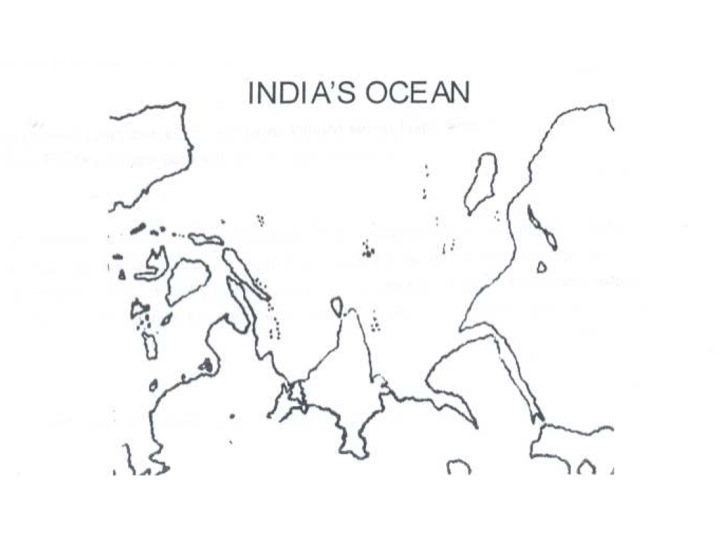
The development of ‘Access Denial’ capabilities has shown impressive growth over the last decade and a half, not just in terms of material progress but also in terms of doctrinal foundations and operational precepts. China’s three modernizations, as mentioned earlier, along with their investments in cyber warfare, anti air, anti ship weaponry and anti carrier hardware in addition to the thrust on nuclear submarine, both strategic and nuclear powered attack submarines, a carrier group centered on the Liaoning (ex Varyag) aircraft carrier with its suite of SU30s all make for a force that is increasingly lethal in effectiveness and enhanced in reach. Operating from infrastucture that they have cultivated from Sittwe and Aan in Myanmar to Hambantotta in Sri Lanka, Maroa in the Maldives and Gwadar in Pakistan (collectively the so called string of pearls) would gives teeth to the long range access denial within the coming Third Island Chain.

Specific operational deployments may include one carrier group operating in the Eastern Ocean; a Jin class Ballistic Missile Nuclear Submarine (SSBN) on deterrent patrol; two Nuclear powered Submarines (SSN) on SLOC patrol with cooperating surface group and maritime patrol aircrafts; long range maritime strike air crafts operating from Aan or Gwadar; one amphibious brigade standby with transports on hand at one of the ‘string of pearls.’ Also one regiment of ASAT missiles along with cyber warfare teams to manipulate, black out, control and wage information warfare that will seek to paralyze operations in the Indian Ocean or Eastern Ocean.

In the absence of a security oriented cooperative impulse, the problem with such sweeping strategies (specifically the coming ‘Third Island Chain’ superimposed on a long range Access Denial Strategy), is its blindness to recognize that, as historically never before, we are in fact dealing with a sea space that, in Mahan’s words, is the busiest of all the “vast commons.”

[…]

Conclusion

While India may, with some justification, celebrate the ‘Gandhian Moment’ that Anna Hazare recently ushered in; the ultimate reality of the international system is the place that power, in all its dimensions, enjoys in the scheme of assuring stability in relations between nations. The strategy of Access Denial is one such defensive power tool which is available to a nation provided it nurtures and develops capabilities that serve to ‘contest and deny’ adversarial power projection. History has suggested that for the strategy to have impact not only must in-theatre force balance be tilted towards the rebuffer through asymmetricity, but also, the first salvo must be his. After all during the first Iraq war the die was cast when US forces began to build up in the Arabian Peninsula, it was also the time when they were most vulnerable and if at all access was to be denied, that was the moment.  The instant having been lost Iraq’s fate was a foregone conclusion unless it had chosen to sue for peace under any terms.

China takes the comprehensive national power approach; where it sees the effect of an event on its own endowment and its ability to control the occasion and its outcome as a primary virtue. In articulating its strategic objectives it has unambiguously identified three canons the first of which is internal and external stability; the second is to sustain the current levels of economic growth and lastly to achieve regional preeminence.  Gone is the ‘power bashfulness’ that marked the Deng era, in its place is a cockiness that is discernible.’ In the absence of a security oriented cooperative impulse, the problem with such sweeping strategies specifically the coming ‘Third Island Chain’ superimposed on a long range power projection strategy is its blindness to recognize that, we are in fact dealing with a sea space that is the busiest of all the “vast commons.” The reluctance for collaboration makes the potential for friction high.

Contemporary challenges in the Indian Ocean and Eastern Ocean (IOEO)  region are dominated by three currents. What direction China’s rise will take is a matter of conjecture, of significance is that the potential for a collision is a reality and the only consideration that could deter it, is the ability of India to attain a strategic posture in the IOEO that serves to stabilize. On the globalization-nationalism-non state actor conundrum, clearly plural societies with decentralized control are more likely to transform, adjust, adapt and tweak their systems than monolithic centrally controlled States such as China which are intrinsically brittle in form, the fallout on the region caused by a transformation inconsistency can only be traumatic. The third current is India’s relationship with the USA; it is here that some control exists in the hands of our policy makers. India has shown itself; through restraint, pluralistic and popular form of governance to be a responsible State that upholds the status quo yet invites change through democratic forces. Its rise, in the main, is not only welcomed but is seen as a harmonizing happening that could counterpoise China.  The next step would logically be to establish an Indo-US strategic framework in the maritime domain, if we are to resourcefully contend with the challenges that the IOEO presents.

Phased implementation of the Access Denial Strategy, from deployment through demonstration prior to a hot exchange is intrinsic to the scheme and essential to its mechanics if the interests of deterrence are to be served. The question of when or under what conditions the plan is to be brought to bear is a dodgy call for if PhaseIII is arrived at; it may well signify a point of no return. The paper has suggested four ‘red lines’ which when breached may enable our Access Denial strategy; it is the second of these which will challenge decision makers to the extreme for if a military build up at Hambantota, Gwadar or Sittwe is threatening then at what stage of the mobilization should the strategy be called into play? The obvious answer is “at an early stage” at which time we must find the will and resolve to translate rapidly from Phase I to Phase II. A focused 50 year technology and infrastructure plan in support of and in harmony with our Access Denial Strategy must be placed on the anvil and resolutely hammered out.

In the ultimate analysis it is about national will and determination. Much like the Shalmali tree (referred to earlier) India has all the trappings of potential power with a benevolent approach; what it must not lack is the wisdom and strategy to shield and protect this growing Shalmali.


[i] In the Mahabharata, Bhishma tutoring Yudhishtra explains to him that in this world for he who is endowed with the intelligence and strength nothing is impossible to achieve. The good and powerful do not show enemity to those who wish them ill, but quietly expose and demonstrate their capacity and power. To bring home this lesson Bhishma narrates the story of the magnificent but not very wise Shalmali tree and the Divine Wind. The ensuing contest is marked by a lack of intelligent preparation by Shalmali. As a result in a last minute knee jerk act of resistance and self protection he hacked away at his limbs, branches and struck off his vast trunk and now stood diminutive and shorn of all his glory. The Wind saw him now small and pathetic, amused he tells him you have inflicted upon yourself what I had intended to do to you, had your intelligence only matched your size! (Shanti Parva, Chap. 150)

[ii] Vice Admiral Sir David Beatty is said to have bitterly reflected on where the blame lay for the debacle in the battle of Coronel and the loss of Admiral Christopher Cradock, his ships and his men in the engagement “Poor old Kit Cradock has gone at Coronel. His death and the loss of the ships and the gallant lives in them can be laid to the door of the incompetency of the Admiralty. They have broken over and over again the first principles of strategy.”

[iii] Regan, Geoffery. “Book of Naval Blunders” Carlton Publishing Group, 2001 London., p 163-165. Much of the blame for this blinkered policy rested with the First Lord of the Admiralty, Winston Churchill. Not content with his political role, Churchill constantly interfered with the working of naval planners often using his forceful personality to bulldoze professional opinion.

Download full article here: Shankar, Anti Access Denial

Kautilya’s Mantra Yuddha: Role of the Military in determining Comprehensive National Power of States

      By

Vice Admiral (Retd.) Vijay Shankar

Keywords: Comprehensive National Power (role of military), Kautilya’s Arthashastra, China Grand Strategy

Download full article here: Shankar, Role of Military in Determining CNP

Excerpts:

[…]

In his treatise, Arthashastra (4th Century B.C.E.), on war, politics, economics, diplomacy and statecraft, Kautilya, underscored the importance of dynamism in the growth of a state. To him passivity was outlandish[i] and the objective of a State was power not just to control outward behavior but also the thoughts of one’s subjects and one’s adversaries.[ii] He outlined eight precepts that governed the general power of a State[iii]:

Every nation acts to maximize power and self-interest.

  • Moral principles have little or no force in the actions amongst nations.
  • Alliances are a function of mutuality.
  • War and peace are considered solely from the perspective of what advantages they provide to the instigator.
  • The ‘Mandala’ premise of foreign policy provides the basis of strategic planning of alliances and a general theory of international relations.
  • Diplomacy of any nature is a subtle act of war in contrast to the Clausewitzian view of war being a continuation of polity.
  • Three types of warfare are upheld, the first is open hostilities, the second is war through concealment and lastly a war that is waged through silence and subterfuge.
  • Seeking justice is the last desperate resort of the weak. This sentiment would appear to be a common theme amongst the ancients for in Thucydides History of the Peloponnesian War, when the Melians talk of justice and fair play confronted with the prospect of conquest by Athens, the latter contend that such tactics were the last desperate move of a nation facing defeat[iv].

The story of Horatius Cocles’ last stand on the northern bridge across the river Tiber in defense of Rome against its enemies, encapsulates the spirit of the Roman citizen. It won for them their commonwealth and empire that spanned from West Asia to the British Isles. In a short period of 53 years (219 – 167BC) this entire area was brought under the dominion of the single city of Rome. The story goes that Horatius standing at the head of the bridge, fearing that a large body of Rome’s enemies would force their way into the city, turned around and shouted to those behind him to hasten back to the other side and break down the bridge. They obeyed him and whilst the bridge came down he remained at his post obstructing the progress of the foe. The assault was reigned in. Cocles himself followed the bridge into the river. It was this enthusiasm for noble deeds and a lofty spirit engendered by Roman traditions in addition to their customs, institutional faith in the design of their political systems and their moral incorruptibility that made for Empire.[v]

One hears a similar message in the voice of Kautilya when he summarizes the wellspring of a King’s power. He states in the Arthashastra “A King’s power is in the end tied to the popular energy of the people; for not being entrenched in the spirit of his subjects, a king will soon find himself easily uprooted”.[vi] In this context the spirit of the people refers to their adherence to dharma, faith in the king and his leadership, their wealth generating capabilities and their belief in the general superiority that their way of life represented.

In as much as the decline in power of both the Mauryan and Roman empires are concerned, the words of Gibbon are equally applicable, “The decline was the natural and inevitable effect of immoderate greatness. Prosperity ripened the principle of decay; the causes of destruction multiplied with the extent of conquest; and as soon as time or accidents removed the artificial supports, the stupendous fabric yielded to the pressure of its own weight”[vii]. There is also another school of thought that believes that it was the new religion that weakened the will to look for rewards in another world and not in this, that contributed disproportionately to the decline of empire; Buddhism in the instance of the Mauryan realm and Christianity in the case of Rome.

The Roman Moment [viii]

The diamond jubilee of Queen Victoria’s ascension to the British Empire’s throne was celebrated on 22nd June 1897. The jubilee stretched over five days on land and sea. A military procession of over 50,000 soldiers included troops from India, Nepal, Canada, its African possessions, Australia, New Zealand and Naples. At sea, 165 ships manned by 40,000 sailors and 3,000 heavy guns saluting Her Majesty gave teeth and ‘hard power’ to the fact that the realm was always, not just protected, but also had the capacity to vanquish any foreseeable opposition.  Eleven viceroys and premiers of Britain’s self governing colonies stood in prominent attendance alongside kings, princes, maharajahs, ambassadors and emissaries from the rest of the world. The event was celebrated in every corner of the Empire from Hong Kong to Singapore to Hyderabad, Bangalore, Zanzibar to the Table Bay and in Ottawa. In Fareed Zakaria’s words and as one historian covering the events wrote this was a ‘Roman Moment’. In sheer military strength, organizational and administrative excellence, in the virtues of its political systems, the self ordained legitimacy of their imperial systems and the superiority of their cultural and structural strengths there was no peer to this Empire.

In the present day environment it is difficult to even contemplate the extent, grandeur and the dominance of Queen Victoria’s bequest. From the time she wore the mantle of the Empress of India (1876) the Empire had been linked by a web of 170,000 nautical miles of trans oceanic cables and 662,000 miles of terrestrial cables creating a vast network of information highways that enveloped the globe, even a fledgling radio network; invention of which made its appearance in 1896 was included in this complex. Railways and canals were enlarged, deepened and pushed through volumes of commerce inconceivable hither to. The appeal of the Empire, its literature, its norms and sense of fair play, its emphasis on the outdoors and sporting activities, dressing habits, schooling and health programs provided the necessary soft power for dominance of British ideas and the universality of the English way of life; all of which long outlived the impact of their hard power.

[…]

Conclusion

At the heart of the matter lay power. Its quest, accretion and relevance have been the only
constant through all of history. It has provided a rationale for stability and, in its own right, been a regulatory agent. We have noted that given the international system that we are a part of and the realism that pervades it; of all the determinants of power, military muscle is explicit in its application and at the same time implicit as an expression of a country’s will to power. An attempt has been made to place this abstraction within the larger framework of the nation’s standing, or in Fukuyama’s words the ‘Stateness’ of the country. While the task of the international system has been to tame the exercise of power, it is a paradox that the same power provides the facility to regulate and control its exercise. Nuclear power takes the debate to its logical extreme of absolute destruction and in arriving at this macabre conclusion it provides the basis of drawing boundaries and limiting conflicts.
We have in the course of our debate examined the views of several scholars on the
subject and noted in some details the Chinese approach to the formulation of CNP and the manner in which they have transformed their centralized approach, which to some schools appear as a weakness, into strength. Decision making that is command and control and integration of our resources including civil military relations, technology adaptation and our propensity to operate in stove pipes are areas of weakness that we must remedy. Failing which our ability to rise beyond the tactical will remain an enduring impediment. The sage voice of Kautilya reminds us that the military power of a state is not just the mere counting of armed physicals, but also of ‘mantra yuddha’ the power of good policies, sound judgement, precision command, analysis and good counsel.


[i] Kautalya: The Arthashastra. LN Rangarajan (Ed., Rearranger and Translator). Penguin Classics, India, 1992.

[ii] Ibid

[iii] Ibid

[iv] Thucydides.History of the Peloponnesian War Penguin Books Ltd.1954 Pgs 400-8 ‘The Melian Dialogue’

[v] Polibius on Roman imperialism  Regnery Gateway Inc.1980, pp. 216-7

[vi] Kautilya: The Arthashastra. LN Rangarajan (Eds., Rearranger and Translator). Penguin Classics, India, 1992.

[vii] Gibbon, Edward. The History of the Decline and Fall of the Roman Empire. Ed. JB Bury. Methuen & Co. London, 1896.

[viii] Zakaria, Fareed.The Post-American World, WW Norton and company, New York 2008, pp. 167-8

Download full article here: Shankar, Role of Military in Determining CNP

All rights reserved. No part of this article may be reproduced in any form or by any electronic or mechanical means, including information storage and retrieval systems, without written permission from the author, except in the case of a reviewer, who may quote brief passages embodied in critical articles or in a review. Author’s email: snigir@gmail.com

The Ghosts of Henderson Brooks and Bhagat

Double, Double Toil and Trouble [i]

by

VAdm (retd.) Vijay Shankar 

Keywords: Henderson Brooks-Bhagat Report, Higher Defence decision-making, Krishna Menon, Sino-Indian War

Download full article here: Shankar, The Ghosts of Henderson Brooks and Bhagat

Excerpts:

The War that Defied Impulse

Sun-Tzu, exhorting the virtues of a skilful Commander, advocates the attainment of a position from which he cannot be defeated and misses no opportunity to master his enemy. Thus, he declares, “A victorious army wins its victories before seeking battle, an army destined to defeat, fights in the hope of winning.”[ii] This pithy avowal so aptly describes the strategic essence and outcome of the Sino-Indian conflict of 1962.

India had blinded itself to every principle that governed national strategy making; from the absence of an understanding of the nature of war that was to be fought, to calamitous incompetence of leadership at the highest political and military levels. The fact of courtiership pervading control, disintegrating logistics, and the sheer fantasies that replaced political and strategic orientation were the consequences of institutional ineptitude. So it hardly astounded the detached observer (and they were many) when on 17 November 1962, Prime Minister Nehru faced Parliament, and as the American news magazine, Time, reported, “his agony was apparent, as he rose in Parliament, three days before the Chinese cease-fire announcement, to report that the Indian army had been decisively defeated at Se La Pass and Walong.”[iii]

[…]

Brief Narrative of the Conflict

War broke out on 20 October 1962 when China launched two assaults. In the Aksai Chin sector the Peoples Liberation Army (PLA) sought to expel the Indian forces from the Chip Chap valley. In the NEFA the McMahon Line was breached and fighting broke out at Walong and along the Tawang-Bombdi La-Se La axis. By 24 October, Chinese forces had moved nearly 16 kilometres south of the line controlled by India prior to 20 October. In the Aksai Chin the Chip Chap valley had been vacated and Chinese forces had moved to Pangong So. Four days of fighting was followed by a lull of three weeks during which Zhou Enlai once again offered the 1959 quid pro quo. The offer was rejected and fighting resumed in both sectors on 14 November. In the Aksai Chin, Indian forces put up stiff resistance at Rezang La and the Chinese advance was stalled. A unilateral ceasefire was declared on 21 November. In the east, Chinese forces had penetrated to the outskirts of Tezpur, a distance of almost 60 kilometres south of the Indian line of control by this time. The Chinese also undertook to withdraw 20 kilometres behind the line of actual control that existed on 07 November 1959.[iv]

One of the abiding puzzles of the entire episode which could have had a critical impact on the outcome was, why combat air power was not brought to bear on the operational situation. Particularly in the light of the PM’s declaration of the inviolate nature of India’s borders in 1954, and the events of 1959 which ought to have stimulated preparedness. The Indian Air Force of that day certainly had in its inventory a combination of modern fighter aircrafts (Hawker Hunters and Dassault Mysteres) and bombers (English Electric Canberras) that were quite capable of operating in both sectors. What is even more mystifying is the reported request by Prime Minister Nehru for air power support from the USA.

[…]

The Report

The Henderson Brooks and Bhagat report was presented to the new Defence Minister Mr Y.B. Chavan on 02 July 1963. Earlier in April, in reply to a question in Parliament, he affirmed that Army Headquarters had already instituted measures to implement the lessons to be learned based on the terms of reference of the report. These included quality of planning, air-land cooperation, training for high altitude warfare, depth of officer man relationship, focused intelligence service and the creation of a chain of strategic airfields.[v] What was conspicuous in its omission was a statement on the blemishes in higher defence management, the failings in the political direction of the war and ‘courtiership’ being promoted in the military. He also mentioned that the contents of the report in its entirety were not being disclosed for considerations of security.

On 02 September 1963, an intriguing statement was made by the Defence Minister in Parliament, he disclosed that the Inquiry Committee had not confined its investigations to operations alone but had also examined the “developments and events prior to hostilities as also the plans, posture and the strength of the Army at the outbreak of hostility.” Further, that a detailed review of the actual operations had been carried out “with reference to terrain, strategy, tactics and deployment of troops.” He also summarised the main recommendations of the report sticking to the terms of reference (which by now was well known) and later (on 09 September) in a statement on defence preparedness, he confirmed that changes were underway which encompassed expansion, reorganisation, modernisation, development of comprehensive infrastructure and enhancing operational efficiency. The value and effectiveness of these sweeping changes were soon to be confirmed during the wars of 1965 and 1971 against Pakistan.[vi]

What remained disturbingly unanswered was the out-of-mandate areas that the report addressed with regard to “developments and events prior to hostilities, strategic posture and plans, which must be taken to have included civil military relations, higher defence management, decision making and the political direction of war.” In 1963 to divulge these may well have compromised national security, but to persist through time is to invite long shadows to loom over the military establishment.

[…]

Fast Forward Half a Century: The Question

In 2008 India’s Defence Minister Mr A.K. Antony told Parliament that the Henderson Brooks-Bhagat Report could not be declassified because its contents ”are not only extremely sensitive but also of current operational value.”[vii] Fifty years on it is challenging to comprehend what the report could contain that would warrant such sarcophagal silence. As far as “operational value” is concerned it is an uncomfortable contradiction that there exists a document in the public domain titled “The Official History of the Conflict with China (1962)” by Sinha and Athale, published by the History Division of the Ministry of Defence in 1992, that has, in 475 pages, given a detailed and critical operational account of the war including the run-up. The Introduction Section on page XXII sets the tone of the document, when alluding to the transformation in the defence establishment that Krishna Menon was experimenting with, “such basic changes required first of all a committed, or at least pliant, band of army officers in key positions. So mediocre Thapar was selected instead of the doughty Thorat as the Army Chief, and Bijji Kaul was made the CGS.”

There are also a host of analytical books written on the subject in addition to Neville Maxwell’s “India’s China War” which claims access to the Henderson Brooks-Bhagat Report. It is also an awkward truth that the Woodrow Wilson Centre in the USA has obtained a large collection of Chinese archival documents featuring Beijing’s foreign policy before and during the 1962 conflict which would undoubtedly throw light on only the Chinese perspective.[viii] For scholars and students of history, without an alternate point of view the first becomes the gospel.

Under these circumstances the belief that there exists continued operational value in keeping the Report classified must be viewed with considerable circumspection. The question that then begs to be asked is, what is it in the contents of the Report that makes it sensitive enough to cling on to the ‘Top Secret’ classification, even after half a century? If the answer to the question is, as mentioned earlier, “developments and events prior to hostilities, strategic posture and plans which must be taken to have included civil military relation, higher defence management, decision making and the political direction of war” (if this hypothesis is true) then it is the accountability of offices and the ‘Teflon’ authority that they wield and not individuals (since all primary protagonists are long gone) that is being safeguarded. This is the key scepticism that must be removed if credibility is to be restored in the military establishment.

[…]

The Long Shadow of Ghosts

[…]

India has faced many traumatic events since 1962 that have had critical impact on
security of the nation including three wars, bloody insurgencies, gory terrorist acts,
periodic crumbling of the law and order mechanism, incompetent governance,
authoritarian rule, a crippling lack of strategic vision, a sycophantic establishment and
an inexplicable abhorrence to change. In this contra rotating vortex two institutions
stand out: firstly, the civilian-military bureaucracy who’s ‘duck-back’ all-weather-non
specialist virtue makes it impervious to the demands of accountability; the second
institution is the Military who have stood steadfast in every adversity, unfortunately,
without the savvy to either rid courtiership when it manifests or to view the entire
spectrum of force application as a unity.

Finding Banquo’s ghost sitting at the head of the royal table, the horror-struck
Macbeth, speaks to it; and then recovers; telling his company “I have a strange
infirmity which is nothing to those that know me.” (Macbeth, III.iv) And so it is with the Indian Politico-Military Establishment, it too has a strange infirmity (in the form of a well entrenched self-centred bureaucracy) that is nothing to those that know it.

The spectres of Brooks and Bhagat will continue to consume us unless they
are exposed to the light of day.


End Notes

[i] Shakespeare, William. Macbeth Act 4 Scene 1. The three witches from the play await the coming of Macbeth, the man who they said would be king. The witches with their incantations are piling up toil and trouble till they yield twice the toil and double the trouble for Macbeth.

[ii] SunTzu. The Art of War, translated by Griffith, Samuel B. Oxford University Press, New York 1963, Chapter IV, Paragraphs 13-14, p 87.

[iii] Time Magazine, Cover feature, India: Never Again the Same. Friday, 30 November 1962.

[iv] Sinha and Athale, The Official History of the Conflict with China (1962), History Division of the Ministry of Defence: 1992, www.bharatrakshak.com

[v] Arpi,Claude, The War of 1962: Henderson Brooks-Bhagat Report, Indian Defence Review Vol 26.1 Jan-Mar 2011

[vi] Ibid.

[vii] Ibid.

[viii] See Woodrow Wilson Centre project on Cold War Archives at www.wilsoncentre.org/digitalarchive Collection on Sino-Indian geography.

Download full article here: Shankar, The Ghosts of Henderson Brooks and Bhagat

All rights reserved. No part of this article may be reproduced in any form or by any electronic or mechanical means, including information storage and retrieval systems, without written permission from the author, except in the case of a reviewer, who may quote brief passages embodied in critical articles or in a review. Author’s email: snigir@gmail.com