No Responsible Steward of Nuclear Weapons This

By Vice Admiral (retd.) Vijay Shankar

Two seemingly disparate incidents in recent days hold the portents for unsettling times. The first was, the “absconder General” and erstwhile Pakistan President Musharraf’s declaration on 05 December 2017, of not only his cosy ties with the proscribed head of the terror organisation Lashkar-e-Tayyeba (LeT) Hafiz Sayeed; but more worrisome, the open invitation to the latter’s political party the Milli Muslim League to join Musharraf’s Pakistan Awami Ittehad (PAI). The second incident is, President Trump while launching his administration’s National Security Strategy (NSS), asserted, “Pakistan must demonstrate it is a responsible steward of its nuclear assets… while taking decisive action against terrorist groups operating on their territory.” The NSS, it will be remembered provides strategic guidance to US security agencies for developing policies and implementing them.

Rationally, no nuclear policy, by nature of the weapon involved, can conceivably be inclusive of terror groups. And yet the strategic predicament posed by Pakistan is perverse, for their policy on select terror groups such as the LeT has always been that they are instruments of state policy. The absurd reason proffered is their zeal to fight the external enemies of Pakistan while undermining fissiparous religious elements within.

The question now remains: when militants fundamentally inimical to the Indian State (Israel and the US too) shed the need for subterfuge and quite openly enter Pakistan national politics, is “responsible nuclear stewardship” a prospect at all? Rather, does not this new dimension of political cosiness make for a nuclear nightmare, where an opaque nuclear arsenal under military control is guided by a strategy that not only finds unity with state licensed terror groups but has now unveiled a future for terrorists in politics? Indeed the nuclear nightmare has moved that much closer.

Now, consider this: Pakistan promotes a terrorist strike in India and in order to counter conventional retaliation uses tactical nuclear weapons and then in order to degrade nuclear retaliation launches a full blown counter-force or counter- value strike. This is an awkward but realistic recognition of the logic that drives Pakistan’s nuclear policy.

Cyril Almeida, a columnist for the Dawn newspaper commenting on the reason why the army will not clampdown on terror groups that hurt India suggested that the problem was “the boys (meaning the army) wouldn’t agree, you could see why: you can’t squeeze your asset at the behest of the enemy the asset was recruited to fight against.”

What if the political mainstreaming of jihadists enlarges and gains nation wide acceptance and, while doing so, creates a state and movement largely motivated by fundamental politico-religious ideology? The Taliban and its five year rule in Afghanistan attempted precisely this and failed because a creed that sought a particular kind of Islamic revival through suppression of all else, was but a return to medievalism. A regime of this nature quite wontedly spewed elements that saw salvation only in the destruction of contemporary order. The image of Mullah Omar appearing on the roof of a building in Kandhar 1996 shrouded in the relic of “the Cloak of the Prophet Mohammed,” while other mullahs proclaimed him Amir-ul Momineen the Commander of the Faithful, will remain a watershed moment for the ideology. It placed in perspective the unquestionable authority of the Amir as the people’s voice was made increasingly irreconcilable with Sharia, as was regard for human rights and the rule of law. In this ‘divinely ordained’ disposition, the savage destruction of the Bamiyan Buddhas as symbol of an end to idolatry, came as no surprise. As events unfolded it also brought to the fore how modernity and the political mainstreaming of jihadists is a doomed enterprise.

And what of “responsible stewardship” of nuclear assets? We have thus far argued the hazards of a political future for terrorists in Pakistan. In this reality, given access to a nuclear arsenal, do we not perceive its utilisation to prosecute jihadi objectives? The Pakistan military hardly minces its words on the use of jihadists and the latter’s correlation with their nuclear policy (Pakistan Army Green Book 2004-2015). And what is the Pakistan sponsored terror objective other than to weaken the secular fabric of the Indian state, subvert society and to bring about enabling conditions for secession of Kashmir. It is not a coincidence that these very same objectives find recurring mention in the strategic aims of the military in Pakistan.

In the nine years after 26/11, terror attacks in India originating from across its western borders persist, however with a difference that principal control from Pakistan has devolved to decentralised and often scattered control. Targets are relatively less sensational, albeit these attacks are executed with no less brutality or with diminished politically motivation. Musharraf’s invitation for militant groups such as the LeT to join the political mainstream in Pakistan will have changed all that for the worse.

Pakistan, decidedly, has legitimate security interests, but when these interests are revisionist in nature, be it an aggressive quest for strategic depth in Afghanistan or attempting to destabilise India through the use of state sponsored terrorists or even to suggest that there is a nuclear dimension to these dynamics is to plead a stimulus much deeper than a politico-ideological pledge. For to challenge India or, in Afghanistan, the United States, is to withdraw from what makes for contemporary order. What is emerging and must be recognized is that with Pakistan there is a virulence that ought not to be allowed to thrive under the duplicitous belief that it can be both legatee of international largesse and continue to cavort with jihadists.


.
“Taking Centre Stage in the World”

By

   Vice Adm. (Retd.) Vijay Shankar

            First published in the author’s column on the IPCS website on 28 Nov 2017.                                                                                                 

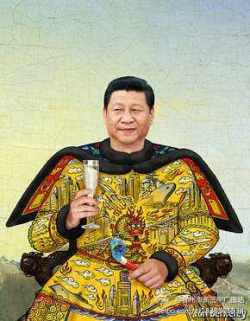
Xi Jinping

Xi Jinping, “Let’s Party like it’s 1793.” The Economist May2013, https://www.economist.com/.

When Chairman Xi declared at the opening of the 19th Congress of the Communist Party of China, “It is time for us to take centre stage in the world,” he may have drawn this deduction from two perceived shifts in the global strategic environment. Firstly, the sensed flagging of US interests in global pacts emblematized by the “America First” agenda that most resembled an impending abandonment of regional partnerships that did not recognise US pre-eminence; and secondly, apparent US distraction in providing decisive security leadership in the troubled parts of the world. Of course, the issue of whether any grouping of major nations wanted Xi’s leadership never entered the debate.

China in recent years has become a major funder of infrastructure in the developing world. Its arrival has challenged existing institutional lenders, particularly when Xi in 2013, announced a scheme to resurrect the medieval Silk Road through a vast network of roads, pipelines, ports and railways that connected China with Europe via Central Asia, West Asia and ports in South Asia and East Africa. China intends to provide proprietary financial support to the project. The innards of the Belt and Road Initiative (BRI) are driven by ‘over the line’ issues such as client-government superintendence and financing on a scale not seen before or, remarkably, with such indistinct terms. Essentially, the scheme’s purpose is strategic influence of global connectivity; while at the same time, deploying close to 30 per cent of China’s substantial dollar reserves (over $3 trillion) that has hitherto held low yielding American debt, on more strategically beneficial ventures.

And yet restoring the lost grandeur of the Silk Route has many other challenges that may not be overcome by Xi’s ‘fiat.’ Beginning with internal corruption, since the entire programme is to be funded largely by state owned banks. In the instance, as a wit put it, “then, how does a barber cut his own hair?” The matter of an opaque dispensation attempting to break from its political roots to gain a mandate of the people must add to planners’ discomfort. The questionable economics of committing billions of dollars into the world’s most impoverished and unstable regions hardly instils confidence in the programme. Already falling prices of primary products and unhinged host politics have undermined some of the 900 constituent projects. Compounding matters is the cost of freightage by rail, which is as much as four to five times that of cargo movement by sea. Besides, the current state of the enterprise is unidirectional as rakes return largely empty on the east-bound leg. Chinese ideology is hardly welcome in the region. The recent use of trade as a tool of punishment, specifically in the case of Philippines from where banana imports were cut, while rare earth exports to Japan were curbed, tariff barriers raised unilaterally, and the general economic retaliation on South Korea, does not in any way serve the ends of free trade-flow or economic inclusiveness.

Chinese historians do not tire of reminding the world of its recent past that staggered between the collapse of an empire to humiliating colonization, from bloody wars to the civil anarchy of Maoism and now in the success of ‘Authoritarian Capitalism,’ some even perceive a return of the Middle Kingdom. But even if the old world order were to make way, slipping into a mire of lost belief, there remains the problem of a potentially bizarre future where not nearly-quite-dead Capitalism is controlled by a totalitarian regime fervently dependent on magnifying growth, perpetuity of dispensation and a disruptive brand of nationalism for stability; all of which echo a past not quite from the Orient but from a more recent Europe of the first few decades of the twentieth century.

In response, for Xi to turn to an even more assertive military-led foreign policy, brings to the fore the probability of conflict; specifically, on the Korean Peninsula, where China’s role as agent provocateur is becoming more and more undeniable. If the generalised theory of war suggests causes of armed conflict as introduction of weapons of mass destruction, a revisionist agenda stimulated by significant change in the balance of power, and lastly, a contrarian and often disrupted structure of order; then these are all eminently resident in the region. Yet global remedies adapted to date have neither generated a consensual course of action nor has the status quo been emphasised. In the on-going brinkmanship polity on the Korean Peninsula, the antagonists have, predictably provided partisan military support and embraced a skewed one-sided stoppage of financial and economic flows that fuel the causes of conflict (being the main donor to North Korea, Chinese leadership sees no reason to check continuance.) Similarly, dialogue has focused on little else than a dual-stance posture: delivery of military threats and a litany of in-executable demands.

The littorals of the West Pacific have, in the meantime, rediscovered the Trans-Pacific Partnership sans the USA; while on the security front the Quadruple Entente (an initiative involving Australia, India, Japan, and the United States) is averred for revival. These undercurrents suggest not just a hesitancy to endorse a China-led order, but also a push back on belt-and-road craft as well as Chinese blue-water ambitions.

In truth, much would depend upon the will to order, the universal repugnance to leaving centre stage untenanted, or the unlikely event of China’s amenability to sharing the stage.


A Pug, a Terrier, & the Doklam Stand Off

By Vice Admiral (retd) Vijay Shankar

This article was first published on the Peace and Conflict Studies website.

Doklam

Doklam Sector source intoday.com  Scale:0 ——– ——-50km

William Moorcroft, a British veterinary surgeon of the East India Company, set off in 1816 on an expedition to the Kailas region of Tibet to search for that breed of Central Asian horses that would revitalise the blood stock of the Company’s cavalry. His quest took him to a Tibetan official, where to his astonishment he was greeted not by his fabled strain of mounts but by two familiar breed of dogs. One a Pug and the other a Terrier, both alien to the land. So where had they come from? The answer, took a while to sink in: Tsar Alexander’s army had got here before the British.

A shadowy war was underway for control of the strategic passes, plateaus and wastelands of Tibet and Central Asia that led to India. However, Russian intent on conquest then, seemed inconceivable to the Raj. It was not till the middle of the 19th Century when the Khanates along the route fell that the curtains lifted on the ‘Great Game’. As the frontiers of the two empires loomed, it exposed the ill surveyed and poorly guarded borders of Northern India. It took the British Empire four decades after Moorcroft’s ‘close encounter’ to fully appreciate the significance of the Pug and the Terrier.

The Great Game ended after two revolutions and another half century. Yet its legacy of where the Northern frontiers of India lay remained confused, as the British used little else than artful cartography and more of imperial disdain to redraw empire. The modern Indian state has yet to reconcile this dangerous historical equivocation. Early political leadership in India had a cavalier and sometimes Arcadian perspective of history. The absence of unprejudiced attempts at defining geography has left indistinct borderlands to this day that suppurate with disturbing regularity. The region of the Doklam plateau in the tri-junction of India, China and Bhutan is one such region.

Doklam is situated roughly 15 kilometres east of the Nathu La pass that separates India and China. On the western edge of the Doklam plateau is Doka La, which connects Sikkim with either Tibet (Chinese Government Claim) or links Sikkim to western Bhutan. In June 2017, China attempted to extend a road southward across Yadong county, the wedge at the mouth of the Chumbi valley, leading to the thin edge. So, on 18 June, Indian troops crossed into the territory to prevent construction of the road. China has criticised India for entering its “territory.” With Bhutan the dispute involves, a matter of 764 sq. km of territory on the Doklam Plateau. The ‘Wedge’ has enormous strategic significance for China, Bhutan as well as India. Recall in 1962, the real anxiety was that the thrust of China’s Army of Tibet would develop on a North-South axis from the Chumbi Valley to cut off the strategically vital Siliguri corridor (Chicken’s Neck). In 1965, again, China in support of Pakistan, threatened to open this front. If China were to ever get hold of this territory, the Northeast would remain in a state of unremitting peril.

The India-Bhutan Friendship Treaty of 2007, successor to the 1949 Treaty of ‘Perpetual Peace and Friendship’, pledges close “cooperation on issues relating to national interests and security.” It mirrors Bhutanese trepidation of a Tibet encore.  Central to the current stand-off is the building of logistical infrastructure across the disputed plateau that would provide a spring board to drive across the Chicken’s neck. India along with Bhutan has stepped into the disputed area to block advancement of the road. So what has urged Beijing to incite this incident? There are three impulsions which have a bearing on the impasse: Firstly, India’s maritime manoeuvres (‘Malabar’) in the Northern Indian Ocean with the US and Japan underscores resolve to achieve cooperative security and control against an aggressive and revisionist China; India’s strategic disinclination to come on board on the OBOR for reasons of it being “long on politics and spare on economics” has not gone down well with China. Besides the China-Pakistan Economic Corridor is offensive as it passes through the disputed POK; and lastly, the Indo-Bhutan security Compact is abhorrent to China and needed to be put to test.

And what of an improbable escalation to a hot conflict? Clearly the Indian military is prepared. It is also clear that conflict will be waged on terms advantageous to India. In addition to operational manoeuvres undertaken to check China’s land forces; the superior deployable Indian Air force will endeavour to assure a favourable situation in the skies to progress operations on the ground while the Indian Navy will strive to deny the northern Indian Ocean to PLAN exertions as it exercises control over shipping in the busiest lanes of the world located in Arabian Sea and Bay of Bengal; targeting hulls bound for China. Obviously these missions are neither small in scope nor will they come without losses; an eventuality that both nations must be sensitive to will be to the detriment of their larger development goals.

And all this ado for the indifference to misplaced Pugs and Terriers.